See exactly what you get: from pasted brief to pitch folder
The fastest way to understand Pitchkit is to watch it handle one brief, start to finish. Below is a sample catalog of 12 songs by an indie artist, indexed by Pitchkit, matched against a real-world style sync brief, and packed into a pitch folder. The whole workflow takes under a minute.
The 30 second version
Silent screen recording of the actual app: browsing the catalog, pasting a brief, getting ranked matches, and creating a pitch folder.
1Point it at a folder of songs
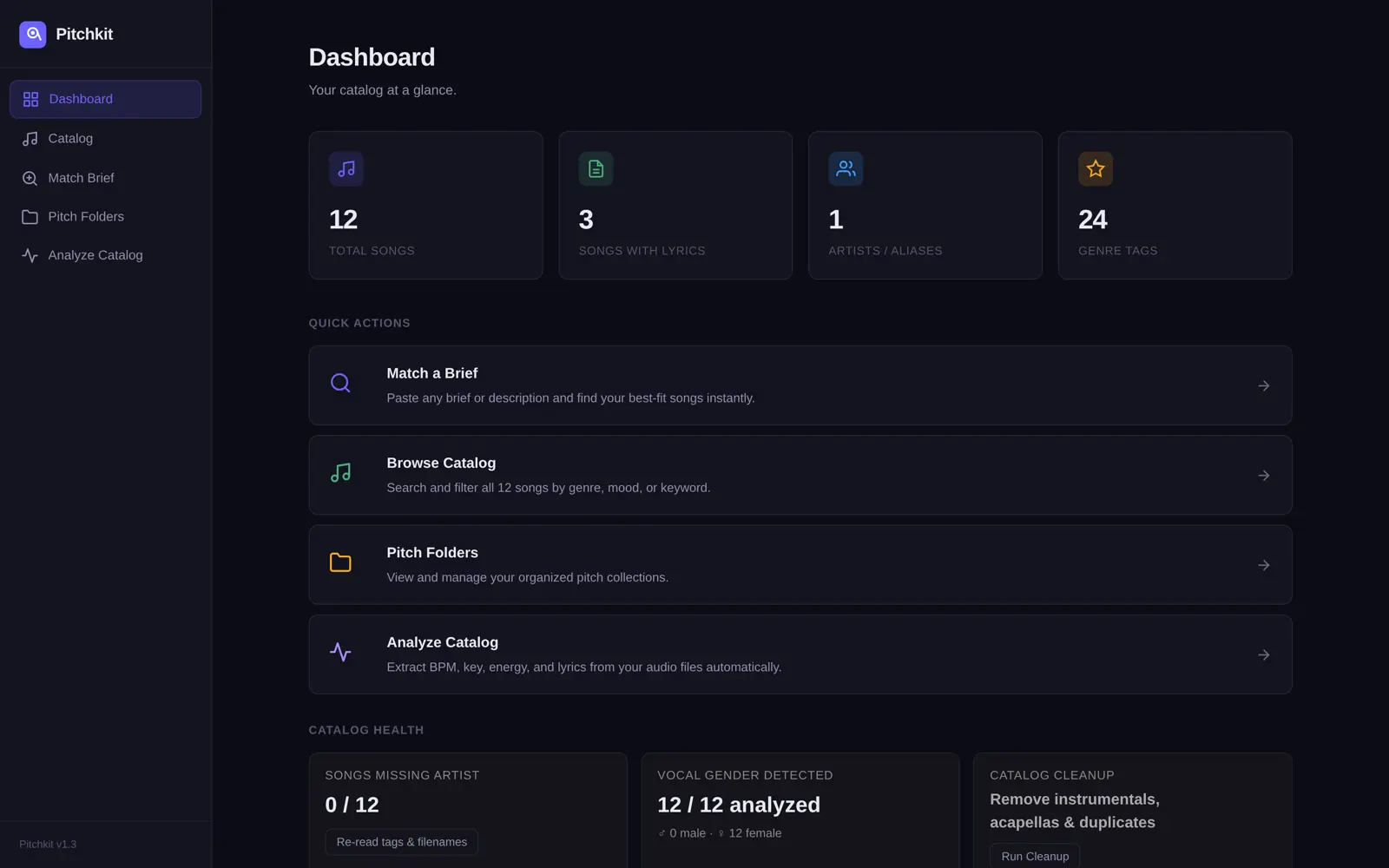
Pitchkit indexes the catalog and works out BPM, key, energy, mood, genre, themes, and lyrics for every track. The dashboard shows the catalog at a glance, including which songs are analyzed and ready to match.
2Every song becomes searchable data
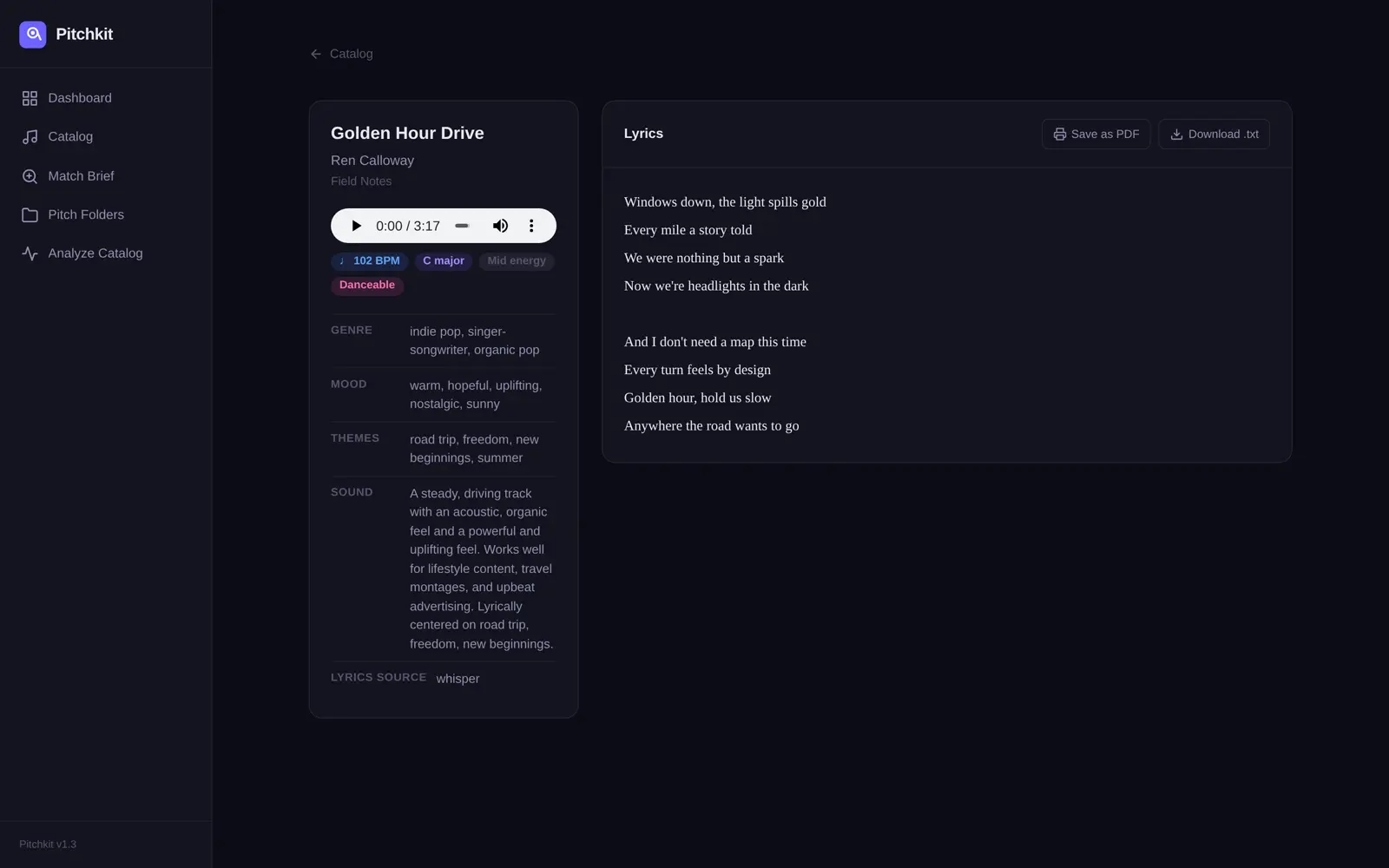
Open any song and you can see what Pitchkit knows about it: tempo, key, energy, moods, themes, a written description of the sound, and transcribed lyrics you can save as a PDF or text file for a supervisor.
3Paste a brief, get a ranked shortlist
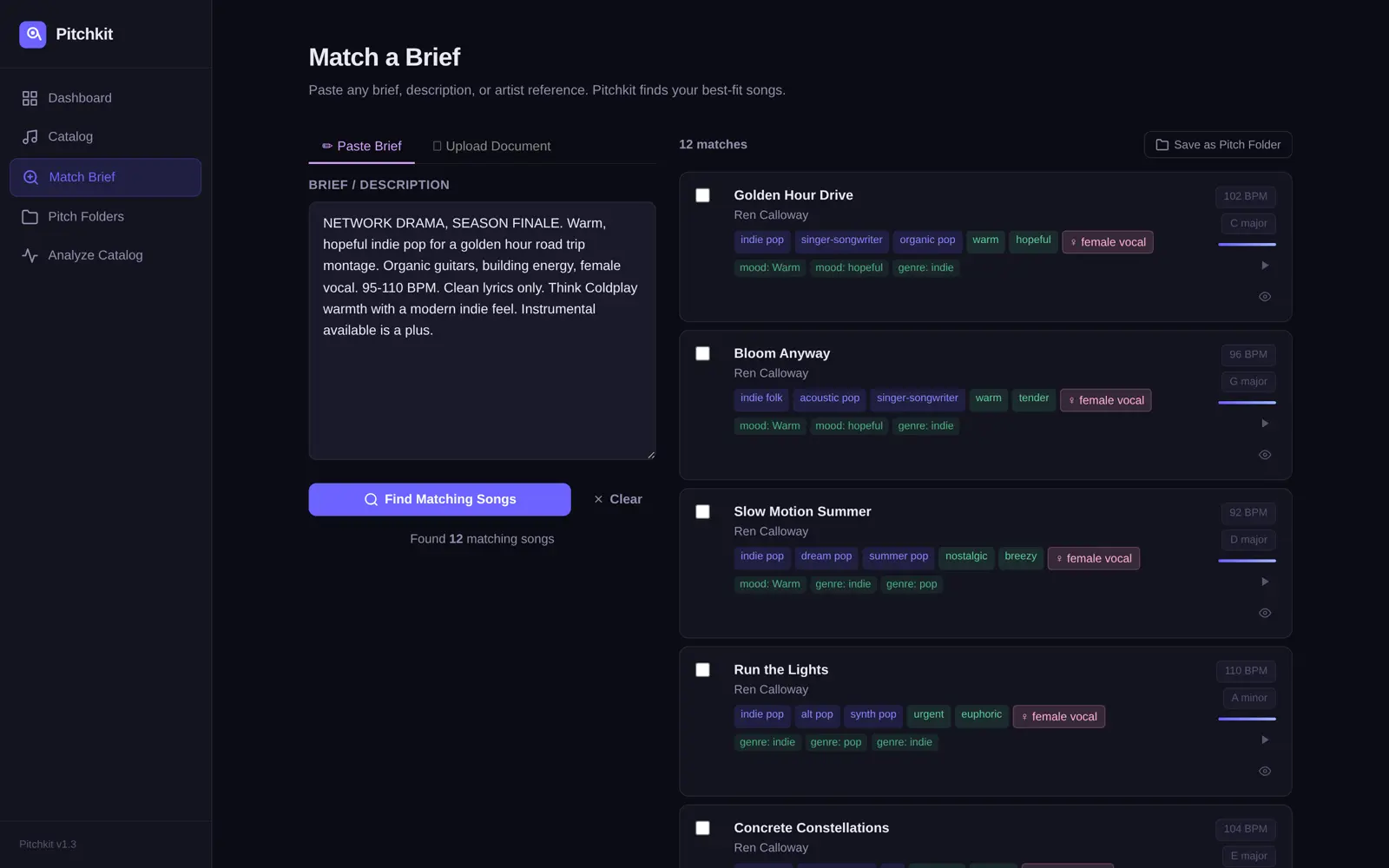
Here is the brief used in this example, pasted exactly as a supervisor might send it:
Pitchkit reads the hard constraints (the 95-110 BPM window, the lyric requirement, the vocal), translates the artist reference into musical characteristics, and scores every song in the catalog against all of it. The result is a ranked shortlist, best fits first, with the matching tags visible on each result.
4One click packs the pitch
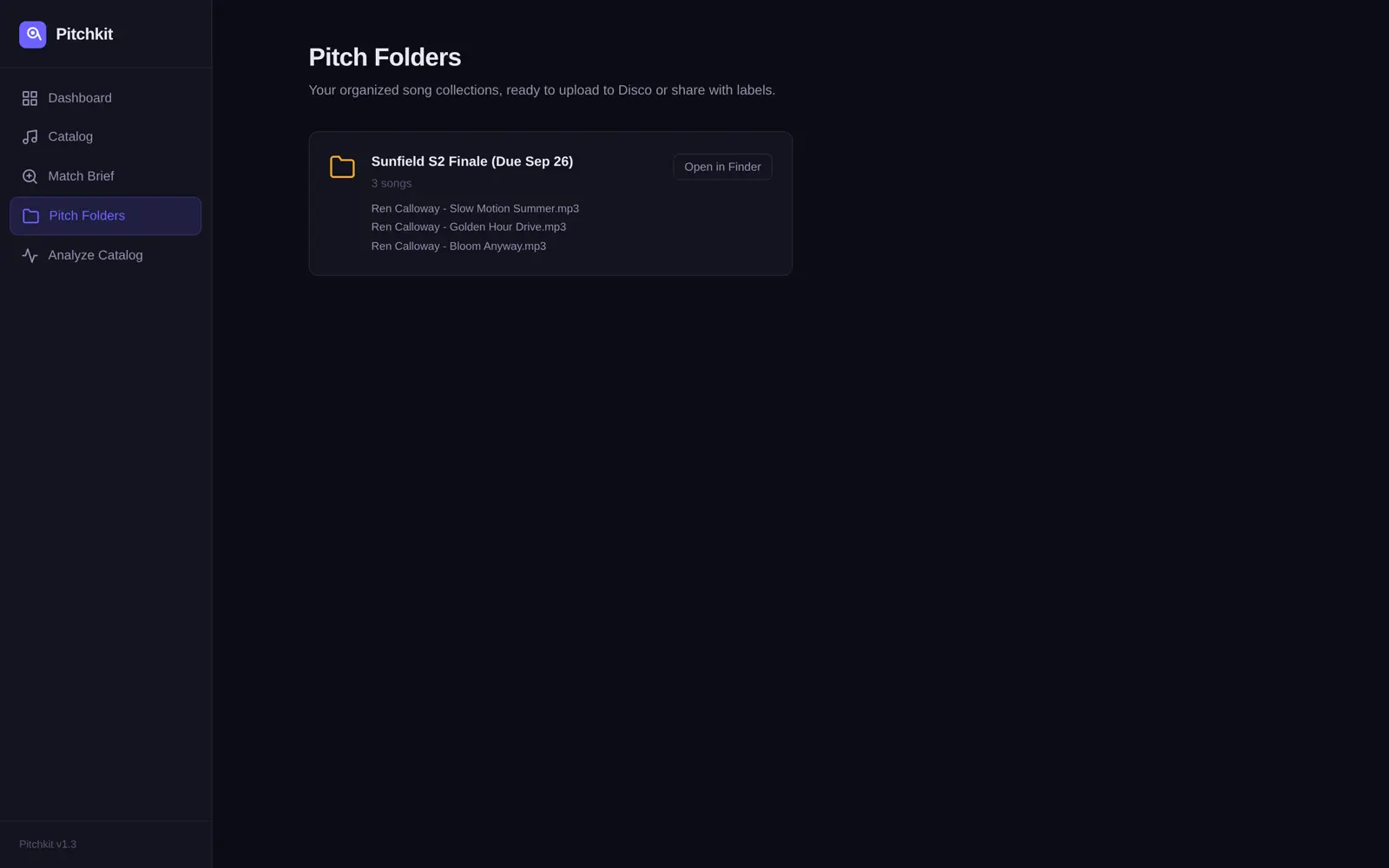
Tick the songs you want to send, name the folder after the brief, and Pitchkit copies the files into a cleanly named folder: Artist - Title, ready to upload to Disco, a private link, or an email.
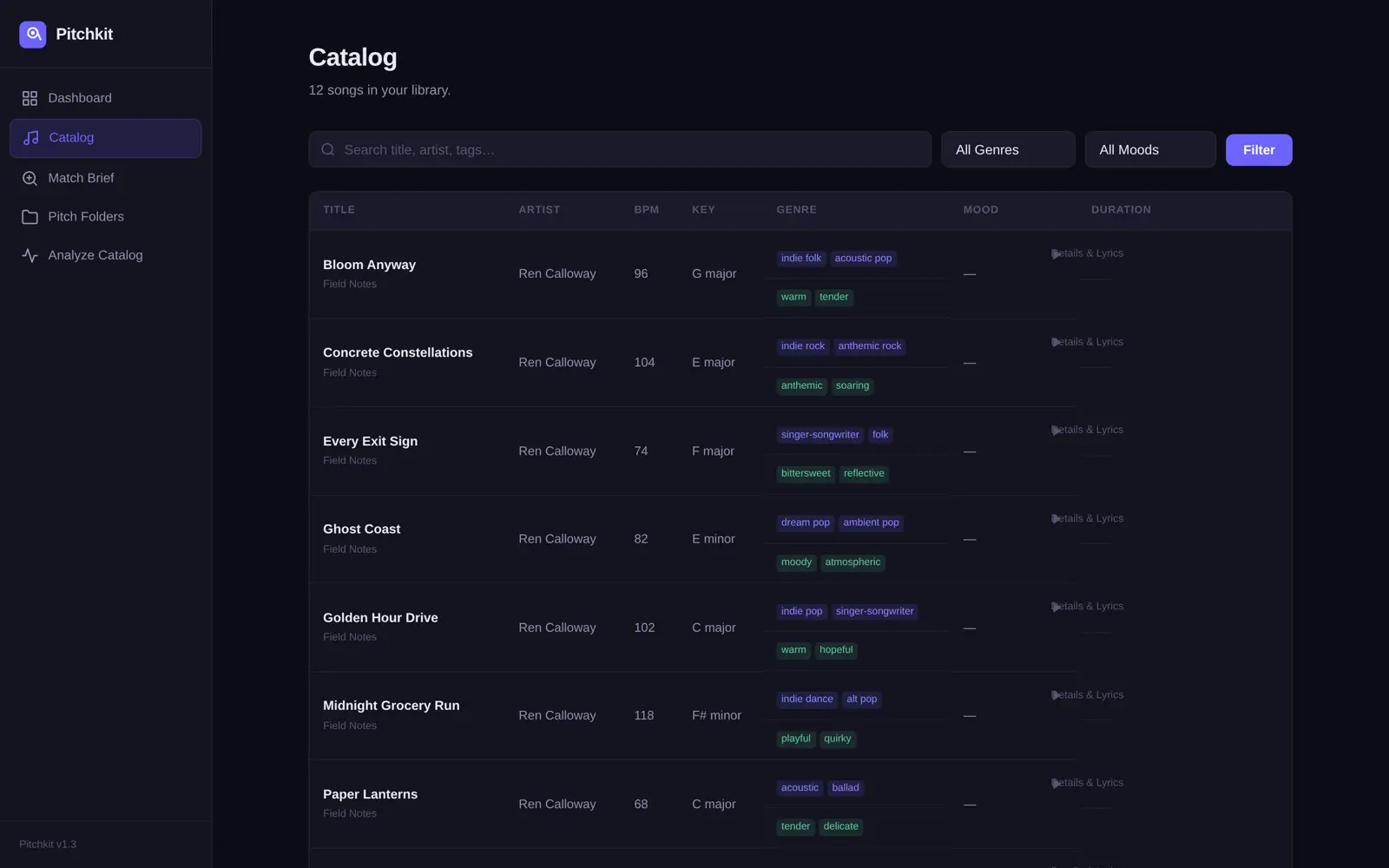
The full catalog view
Between briefs, the catalog page is a searchable, filterable database of everything you have: filter by genre, mood, or keyword, and preview any track in place.
Run it on your own songs
Everything you just saw is in the app. One $39 purchase covers your whole catalog, with no account and no subscription.
Get Pitchkit: $39, one time →